
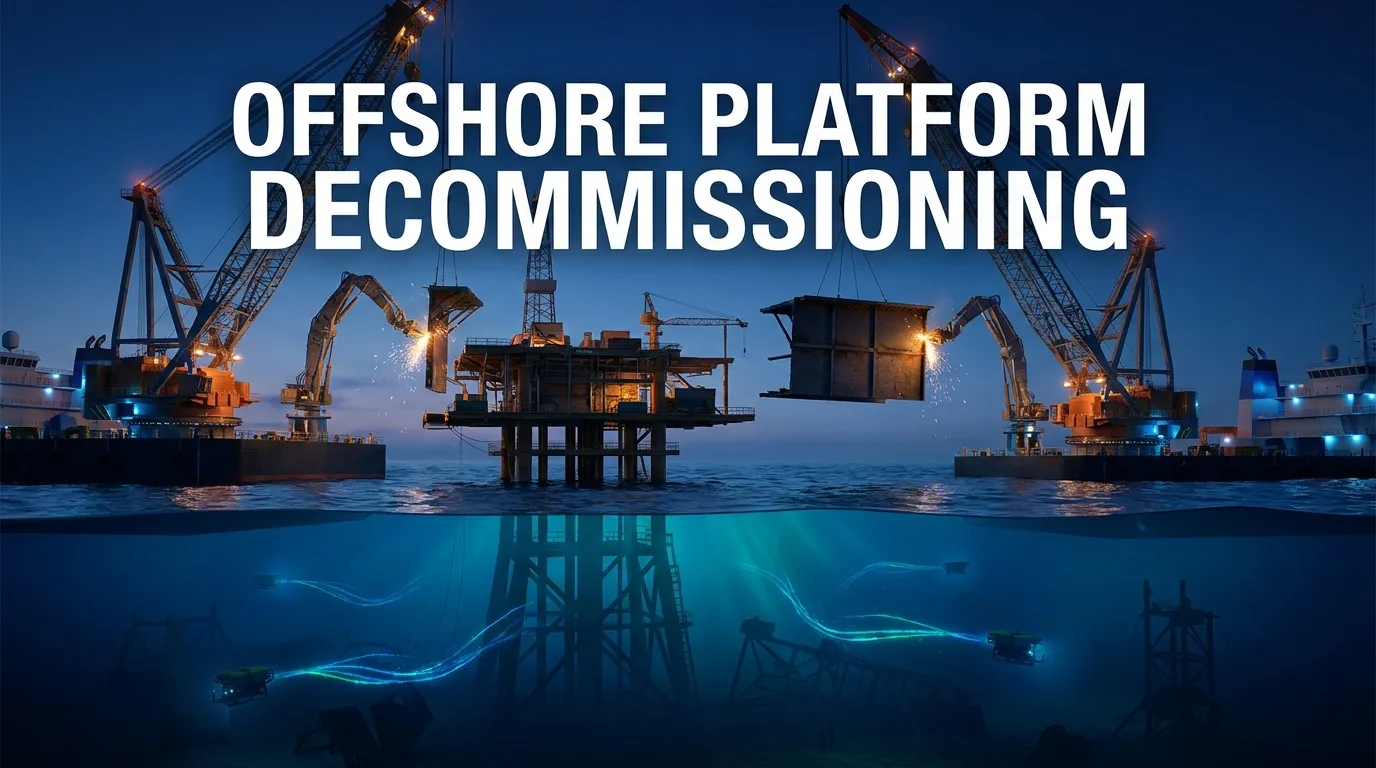
Offshore Platform Decommissioning Animation: Visualizing the End of an Era Safely and Efficiently
As thousands of aging oil and gas animation platforms around the world reach the end of their production lifecycle, the energy industry faces a massive challenge: the safe, economical, and responsible removal of these giant steel structures from the ocean, observing environmental principles so that no serious damage is done to nature. Offshore decommissioning is an engineering puzzle that is often more complex and hazardous than their initial installation and requires specialized steps. With billions of dollars, environmental health, and human lives at stake, there is absolutely no room for error. This article explores how offshore platform decommissioning animation has become an essential tool in the marine engineering sector. We will dive deep into how 3D visualization revolutionizes heavy-lift planning, secures regulatory approvals, mitigates catastrophic risks, and serves as the ultimate tool for winning multi-million-dollar tenders. Join us in this article from Fidar Animation.
The Growing Need for Offshore Platform Decommissioning
The offshore oil and gas industry is undergoing a massive transition phase. In regions like the North Sea, the Gulf of Mexico, and the Asia-Pacific, platforms built in the 1970s and 1980s are no longer economically viable. The process of retiring these assets, known as “decommissioning,” is strictly under legal supervision and is highly complex.
Decommissioning is, in fact, reverse engineering on a colossal scale. This involves plugging high-pressure wells, cutting thousands of tons of steel structures underwater, lifting topsides (decks) that weigh as much as the Eiffel Tower, and transporting them to the shore for recycling. Traditional 2D drawings, Gantt charts, and thick engineering manuals can hardly convey the immense spatial and chronological complexities of these operations. This is exactly where offshore platform decommissioning animation offers unparalleled value.
What is Offshore Decommissioning Animation?
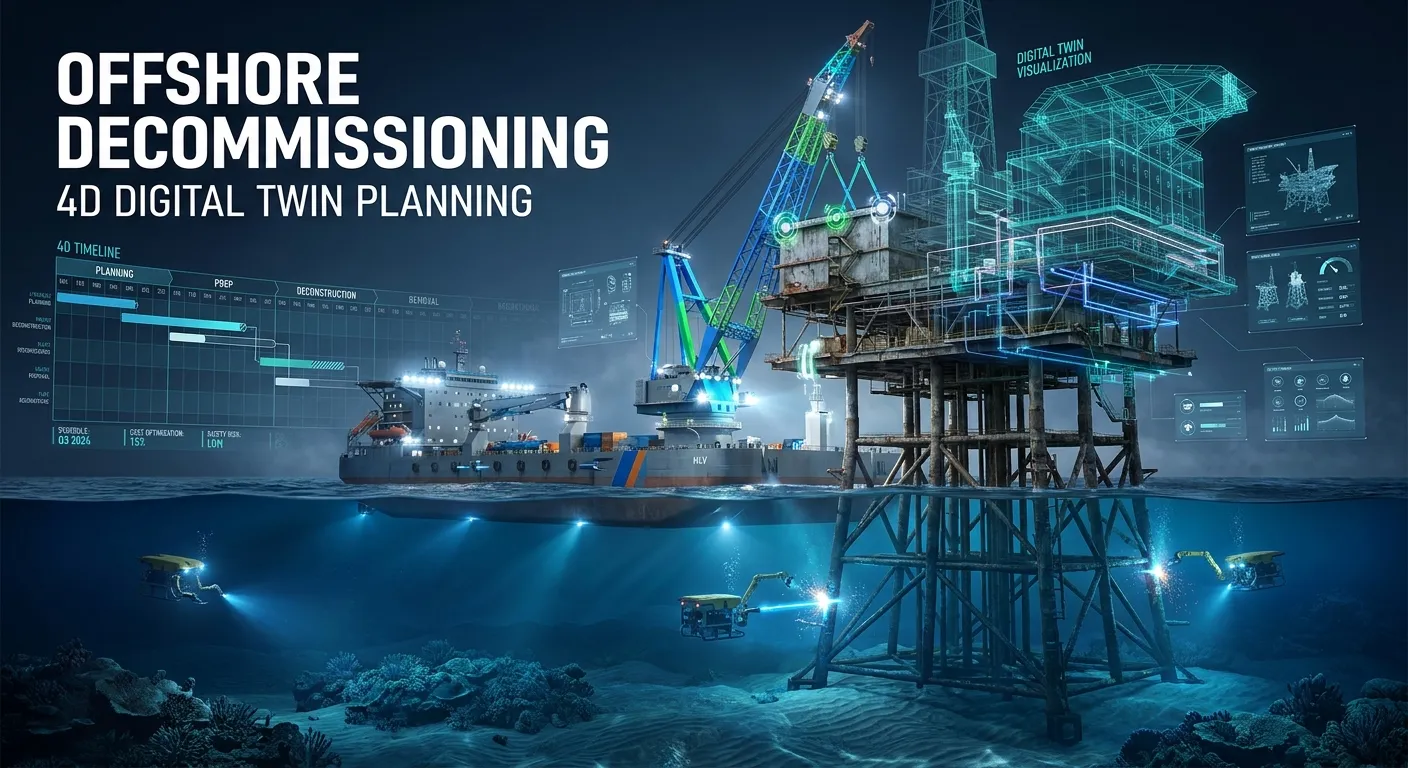
Offshore decommissioning animation is the process of using advanced 3D computer graphics to create a physically accurate, step-by-step visual simulation of an oil or gas platform’s removal. These are not merely artistic representations; rather, they are highly technical “Digital Twins” of the operations.
Animation studios like Fidar Animation, by importing Computer-Aided Design (CAD) models of the existing platform, seabed topography, and specialized Heavy Lift Vessels (HLVs) that execute the work, create a 4D timeline (3D space plus time). Engineers can watch exactly how a giant crane or a specialized vessel like the Pioneering Spirit approaches the rig, locks onto the structure, cuts the legs, and lifts and carries away the topside. Using these animations, they can plan and calculate accurately.
Why is 3D Animation Essential for Decommissioning Projects?
Removing an offshore asset requires flawless coordination among structural engineers, marine contractors, environmental agencies, and health and safety managers. Animation acts as the ultimate common language among these diverse groups and visualizes this process for them in simple language.
-
Stakeholder Engagement and Regulatory Approval
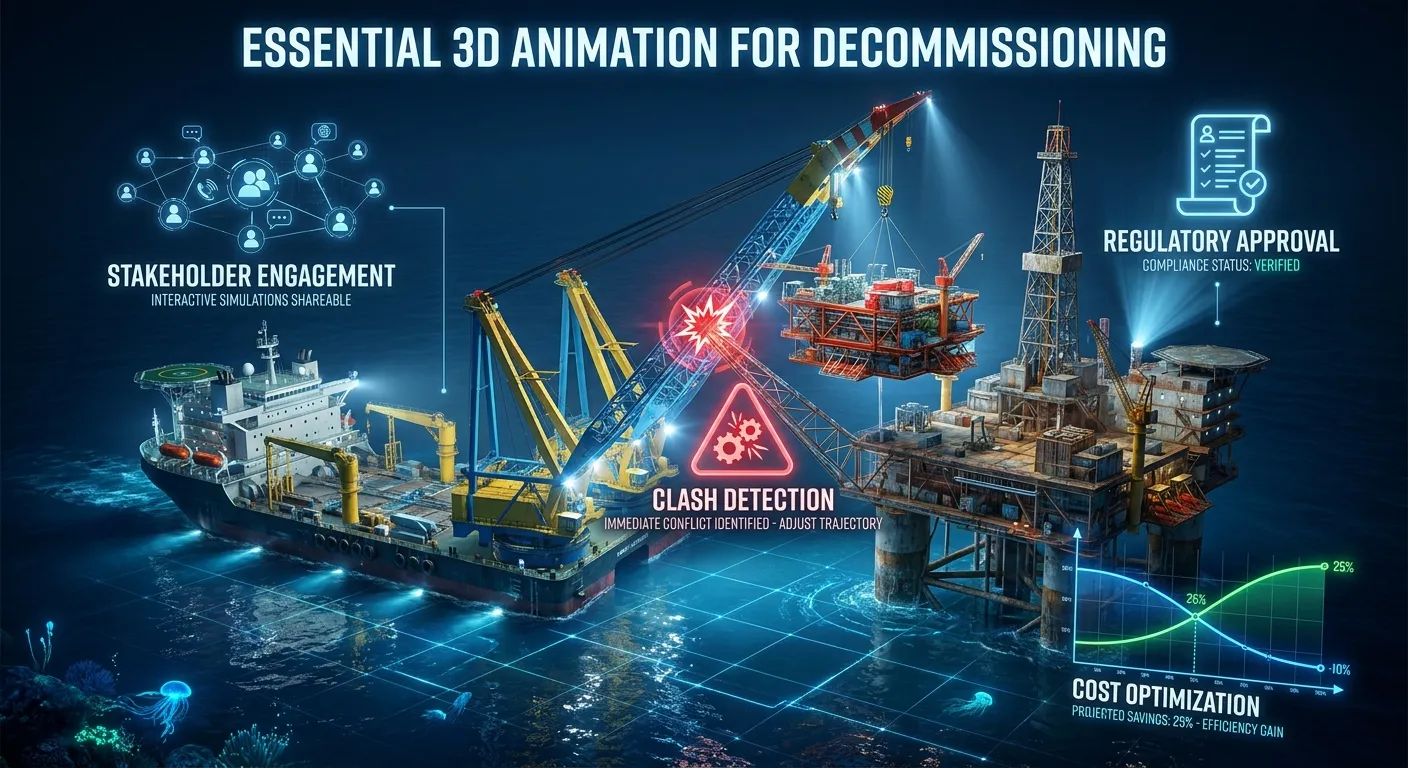
Before any cutting or lifting begins, operators must submit comprehensive decommissioning plans to government regulatory bodies. These authorities demand definitive evidence showing that the removal operation will not harm the marine environment or endanger personnel. A detailed 3D animation clearly demonstrates the removal method, containment of hazardous materials, and environmental safeguards. This translates complex engineering jargon into an easily understandable visual format and drastically speeds up the approval process.
-
Risk Mitigation and Clash Detection
Decommissioning operations are fraught with spatial constraints. Heavy lift vessels must approach fragile and decaying structures dangerously in unpredictable weather conditions. In the digital environment of a 3D animation, engineers can meticulously perform “Clash Detection.” They can check whether the crane boom crosses the helipad during the lift, or if the mooring lines of an accommodation vessel will interfere with subsea pipelines. Identifying a potential collision in an animation costs nothing; however, discovering it at sea can cost millions of dollars and put lives at risk.
-
Cost Optimization
Heavy Lift Vessels (HLVs) and Semi-Submersible Crane Vessels (SSCVs) cost hundreds of thousands of dollars a day. Any delay in operations leads to skyrocketing costs. By simulating the entire decommissioning sequence through animation, project managers can identify bottlenecks, optimize vessel scheduling, and ensure that each stage of the operation seamlessly connects to the next, minimizing costly downtimes.
Key Stages Visualized in Decommissioning Animations
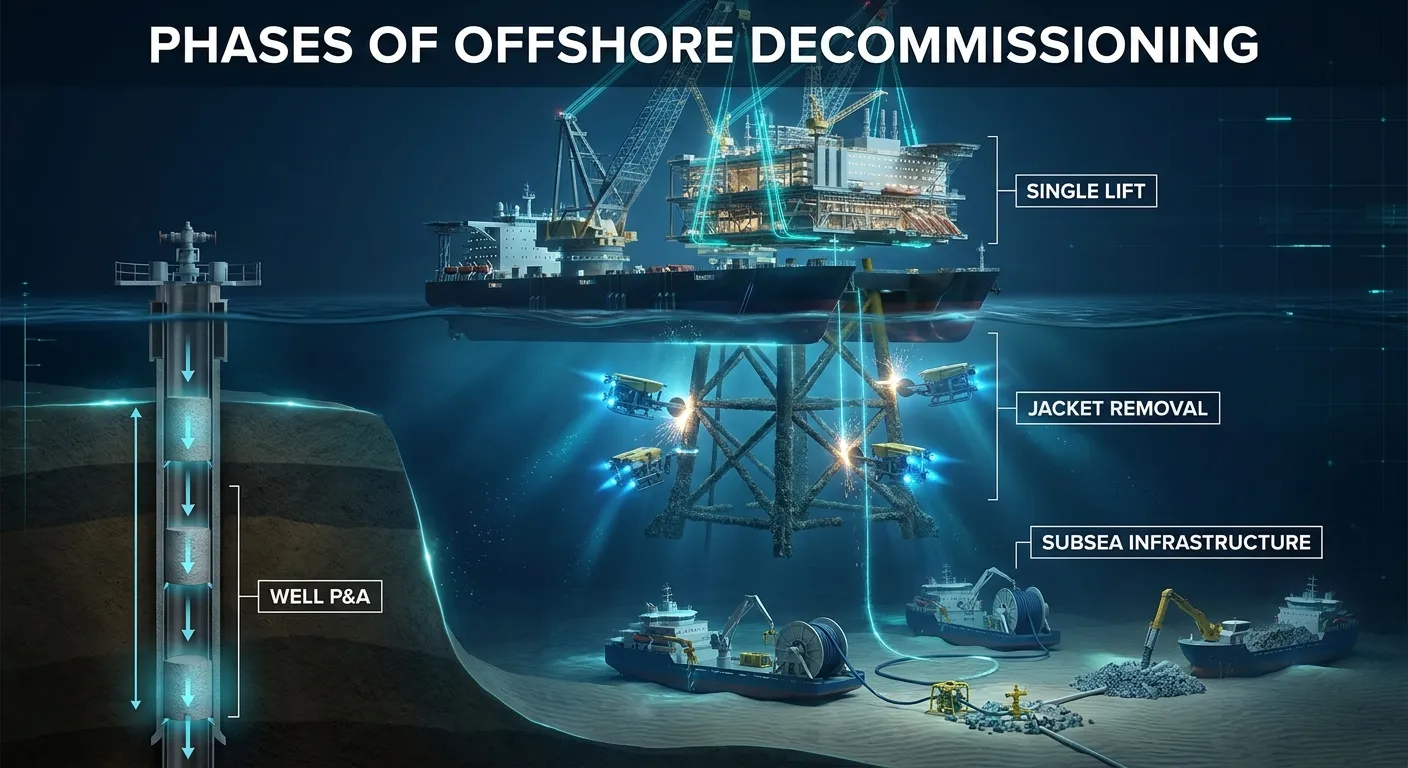
A comprehensive decommissioning animation typically divides the project into several distinct phases. Visualizing these phases helps all parties understand the timeline and methodology.
-
Well Plugging and Abandonment (P&A):
Often the most expensive part of decommissioning, this involves permanently sealing the wells to prevent hydrocarbon leaks. Animations can show beneath the seabed and illustrate the strategic placement of cement plugs inside the well casing.
-
Topsides Removal (Single Lift vs. Piece-Small):
The “Topside” is the visible part of the platform above the water.
-
Single Lift:
Animations show how a twin-hulled vessel lifts and carries away the entire 20,000-ton deck in one smooth motion.
-
Reverse Installation (Piece-Small):
For older structures, the animation shows how cutting modules slice the topside into smaller blocks to be placed on barges by cranes.
-
Jacket and Substructure Removal:
Animations dive underwater to show how Remotely Operated Vehicles (ROVs) and diamond wire cutting tools cut through thick steel legs, and how the massive submerged structure is hoisted out of the water.
-
Subsea Infrastructure and Pipelines:
Animations highlight the trenching, cutting, and recovery of these lines using specialized vessels. If pipelines are to remain in place, the animation shows how they are flushed, cleaned, and covered with rock to avoid posing a hazard to fishing nets.
Engineering and Technical Accuracy Behind the Visuals
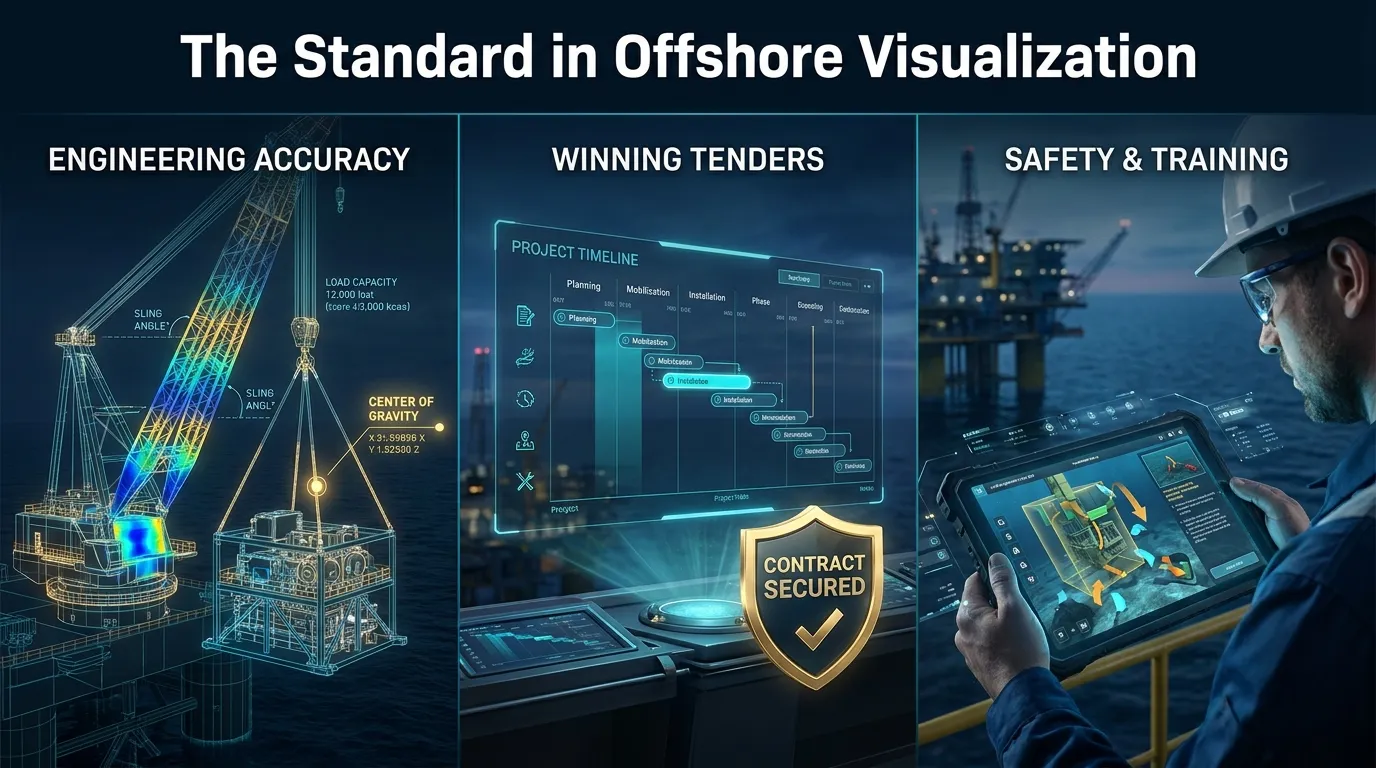
High-end animations in this field require a deep understanding of marine engineering physics. Professional industrial animators use Finite Element Analysis (FEA) and structural integrity reports to shape the visuals. The animation accurately portrays rigging arrangements, sling angles, and Center of Gravity (CoG) calculations, and takes into account dynamic factors such as sea states and the vessel’s Dynamic Positioning (DP) systems.
Winning Tenders: The Role of Animation in Marketing and Bidding
The decommissioning market is highly competitive. Including an animation in a tender proposal is a proven strategy to stand out. It provides the oil and gas operator (the client) with immediate visual proof that the contractor’s proposed method is logical, efficient, and safe. This level of transparency builds significant trust and is often the deciding factor in securing lucrative multi-year contracts.
Enhancing Safety and Crew Training
Decommissioning workspaces are inherently dangerous. Animations serve as vital safety briefings and training modules. Before the crew flies out to the platform by helicopter, they can watch a detailed visualization of the tasks they will perform. This situational awareness is infinitely valuable and drastically reduces the likelihood of accidents and operational errors.
read more: Comprehensive Guide to Jack-Up Vessel Animation: Powering the Future of Offshore Wind
Conclusion
The offshore oil and gas industry is facing a wave of decommissioning operations that will continue for decades. Offshore platform decommissioning animation has proven to be the ultimate solution for visualizing these complex challenges. From winning multi-million-dollar tenders to training crews and preventing catastrophic accidents, 3D visualization is no longer an optional luxury, but an industry standard. As engineering methods advance, the animations that simulate them will remain at the heart of successful, safe, and efficient decommissioning operations worldwide. We at the specialized team of Fidar Animation are by your side in this regard and will accompany you in this complex and specialized subject. Contact us to order an animation and view our portfolio.