
Introduction: Bridging the Gap Between Complex Engineering and Clear Communication
aFloating Production, Storage, and Offloading (FPSO) vessels are the undisputed giants of the modern offshore oil and gas industry animation. These multi-billion-dollar floating superstructures are considered marvels of marine engineering, operating in some of the harshest environments on the planet. However, the design, construction, conversion, and operation of an FPSO involve staggering logistical and engineering complexities. Conveying the concepts of these highly technical sequences to stakeholders, non-technical investors, and offshore crews is a major challenge that requires technical knowledge.
This is where FPSO animation services come into play. By converting thousands of pages of 2D CAD drawings, operational manuals, and project schedules into physically accurate and visually stunning 3D animations, engineering companies can bridge the gap between technical design and clear, universal understanding. Whether to demonstrate the lifting of a complex topside module, explain a dynamic turret mooring system, or visualize delicate subsea tie-back operations, 3D animation has become an indispensable tool in the offshore energy sector. In this comprehensive guide, we will explore how FPSO animation services are revolutionizing the way offshore projects are planned, pitched, and executed. We at the Fidar Animation team have simplified the presentation of this process for you by producing these specialized animations.
Understanding the Scope of FPSO Projects
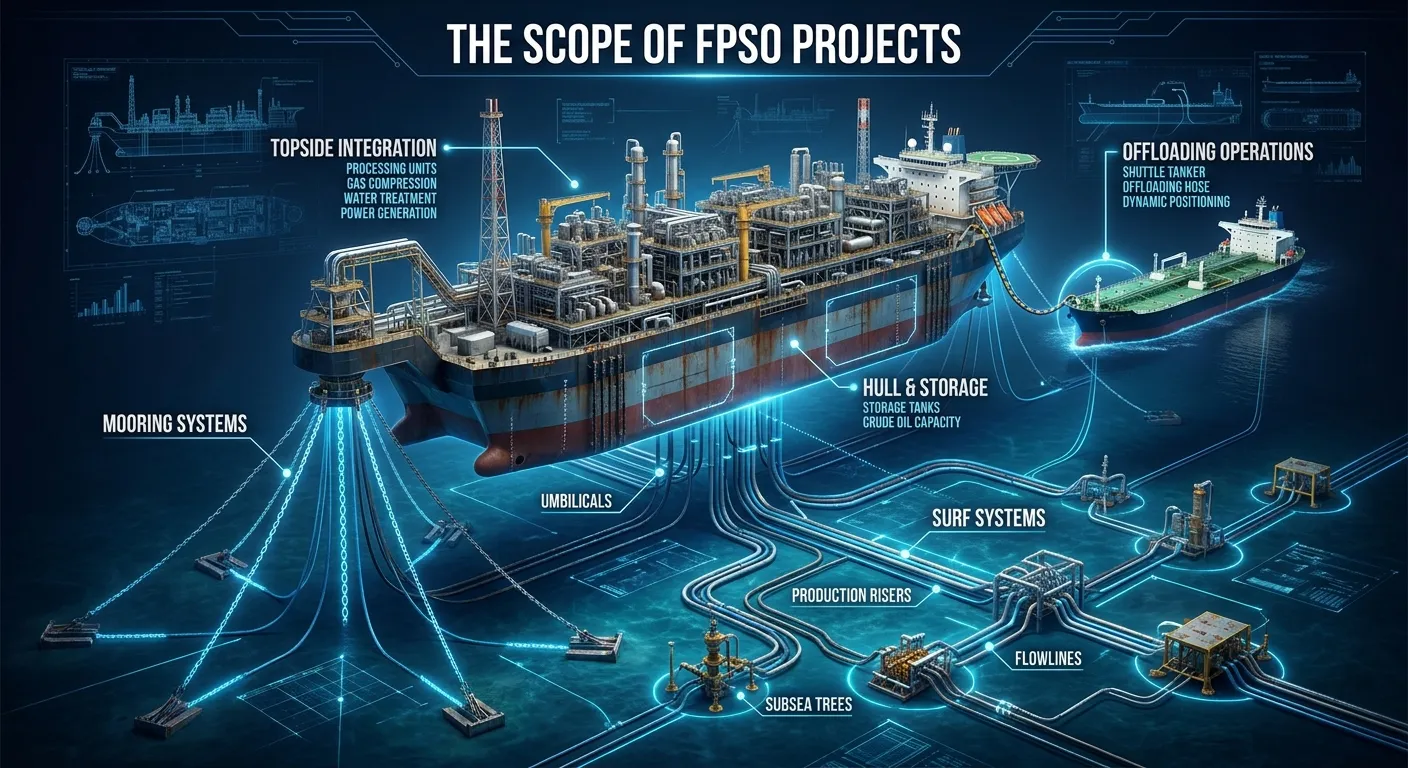
Before delving into the benefits of animation, it is crucial to understand the massive scale of an FPSO project. An FPSO is essentially a floating oil refinery combined with a massive storage tank. They are designed to receive hydrocarbons produced from subsea wells, process them on deck to separate oil, gas, and water, store the stabilized crude oil, and finally offload it to shuttle tankers.
The lifecycle of an FPSO includes several critical phases, including hull construction or VLCC (Very Large Crude Carrier) conversion, fabrication and integration of topsides processing modules, installation of complex mooring systems, and the connection of Subsea Umbilicals, Risers, and Flowlines (SURF). Each of these phases involves multiple contractors, heavy-lift vessels, and a zero margin for error. Visualizing these phases through advanced 3D animations mitigates risk and aligns all project stakeholders.
Key Phases Visualized by FPSO Animation Services
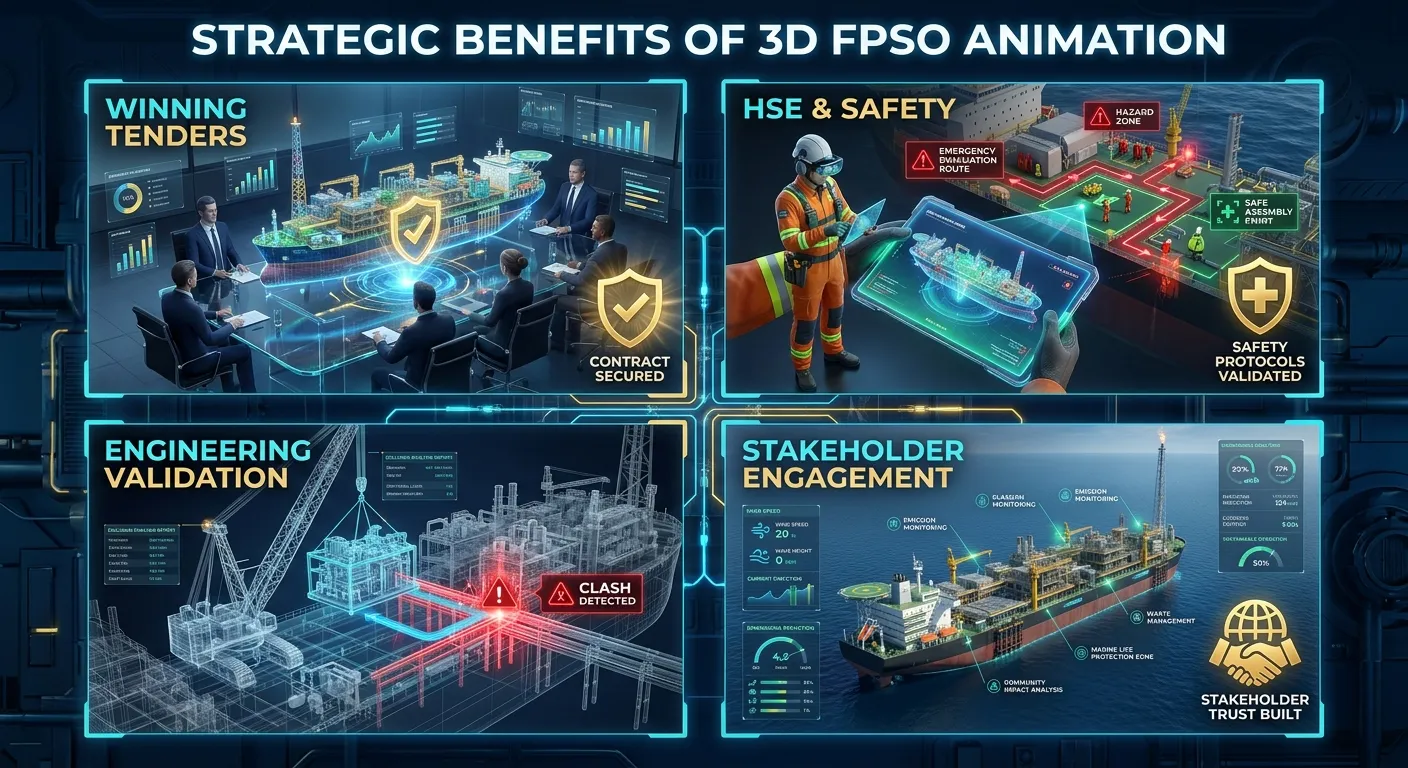
At Fidar Animation Studio, we don’t just create pretty pictures; we create engineering simulations with high physical accuracy. Here are the critical phases of an FPSO project that are commonly depicted:
-
Hull Construction and VLCC Conversion
Many FPSOs are created by converting existing oil tankers (VLCCs), while others are purpose-built from scratch. FPSO animation services can clearly demonstrate the sequences of dry-docking, cutting and removing old steel structures, hull reinforcement, and turret cylinder installation. This visualization is crucial for shipyards to plan the critical path and manage spatial constraints during the conversion process.
-
Turret and Mooring System Installation
One of the most complex components of an FPSO is its mooring system, which keeps the vessel in position while simultaneously allowing it to weathervane around a fixed point to minimize environmental loads. Animations can beautifully depict the installation of internal or external turrets, spread mooring systems, and the deployment of suction piles, torpedo anchors, and anchor chains by Anchor Handling Tug Supply (AHTS) vessels.
-
Topsides Fabrication and Integration
“Topsides” are the processing facilities located on the deck of the FPSO. These are typically built as massive, separate modules weighing thousands of tons. FPSO animation is extensively used to simulate heavy lift operations using crane vessels. By visualizing the precise lifting, rotation, and placement of these modules onto the hull, engineers can identify potential clash points, plan the center of gravity, and ensure the safe execution of Simultaneous Operations (SIMOPS).
-
SURF and Subsea Tie-backs
Connecting the FPSO to subsea wellheads involves complex underwater engineering. 3D animations are excellent for demonstrating the pull-in sequences of flexible and rigid risers through the FPSO’s turret or balcony. Furthermore, animations can clearly explain the layout of the subsea architecture, including manifolds, flowlines, and umbilicals, providing a holistic view of the entire field architecture.
-
Offloading Operations
After the FPSO has processed and stored the oil, it must be transferred to a shuttle tanker. Animations are used to showcase tandem offloading operations, the deployment of mooring hawsers and floating hoses, and the approach and positioning of the shuttle tanker, especially in adverse weather conditions where Dynamic Positioning (DP) systems are put to the test.
Strategic Benefits of 3D FPSO Animation
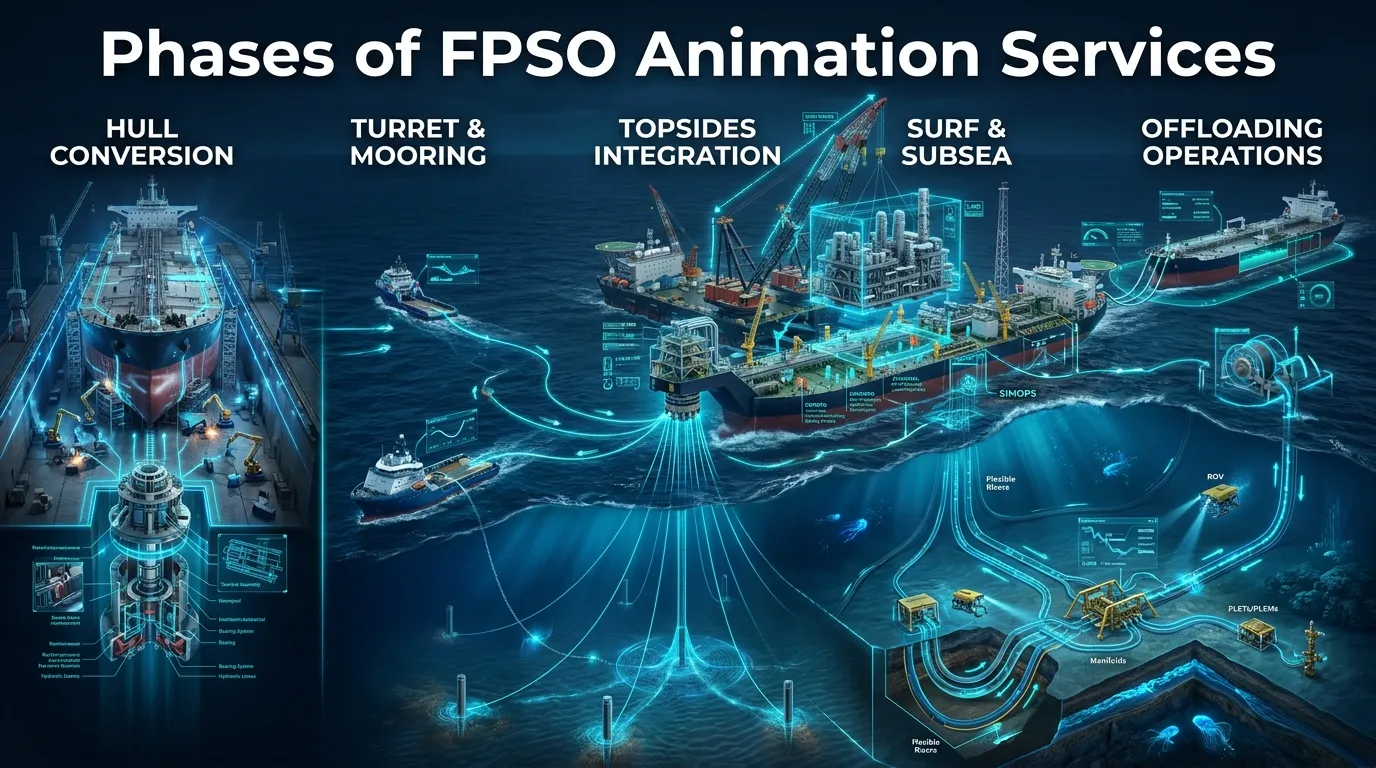
Investing in professional FPSO animation services yields significant returns across various departments of an offshore energy company.
-
Winning Tenders and Attracting Investment:
In the fiercely competitive offshore industry animation, securing a multi-million-dollar EPCI contract requires more than just offering the lowest price; you must prove your methodology. High-quality 3D animations allow bidding contractors to visually demonstrate their proposed installation methods, vessel capabilities, and project timelines. For investors and board members who may lack deep technical expertise, an engaging and understandable animation builds trust and secures financial backing.
-
Enhancing Health, Safety, and Environment (HSE) Training:
Safety is the highest priority in the offshore sector. FPSO animations are increasingly used for HSE training. By creating a virtual version of the FPSO, crews can be trained on procedures, emergency evacuation routes, and safe lifting zones before ever stepping foot on the actual vessel. Visualizing the “line of fire” and potential hazards in a 3D space significantly reduces the likelihood of offshore accidents.
-
Engineering Validation and Clash Detection:
During the planning phase, 3D animations serve as a dynamic validation tool. By animating installation sequences according to the project schedule (4D visualization), engineers can identify logistical bottlenecks, equipment interference, and scheduling conflicts that might be invisible on static 2D plans. Discovering a clash in a digital animation costs nothing to fix, whereas discovering it during a heavy lift operation offshore could result in millions of dollars in vessel downtime costs.
-
Public Relations and Stakeholder Engagement:
Large offshore projects often face intense scrutiny from regulatory bodies and the public. Clear and transparent animations that explain how the FPSO operates, how it complies with environmental regulations, and the safety of its installation can be powerful tools for public relations and securing government approvals.
read more: Comprehensive Guide to Jack-Up Vessel Animation: Powering the Future of Offshore Wind
Conclusion
The complexities of Floating Production, Storage, and Offloading vessel projects require communication tools that are as advanced as the engineering itself. FPSO animation services provide an elegant and powerful solution to this challenge. By translating dense technical data into engaging visual narratives, these services empower engineering companies to win lucrative tenders, validate complex installation methodologies, ensure the highest level of safety for their crews, and earn the confidence of stakeholders.
As the offshore oil and gas industry ventures into deeper waters and harsher environments, the reliance on physically accurate 3D visualization will only increase. For companies looking to maintain their competitive edge, investing in premium FPSO animations is no longer a luxury, but a critical engineering requirement. To see more portfolio examples and order your specialized animation, get in touch with our experts.